Mark personal and shared zones
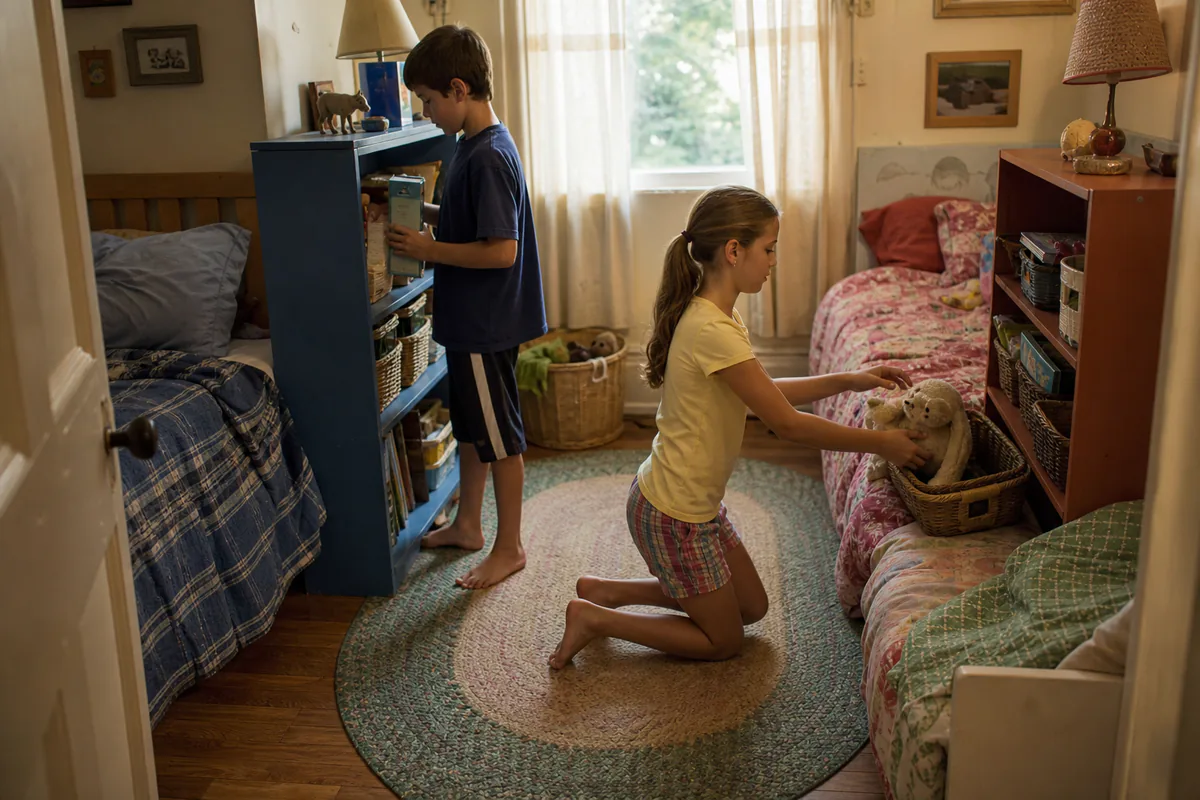
Give each child a clearly identified drawer, shelf, hook, and bedside area. Color, labels, or different baskets can create ownership even when the furniture matches.
Then name the truly shared zones: perhaps the rug, bookcase, and art table. A clear distinction reduces arguments about objects that drift across the room.
Plan for different rhythms
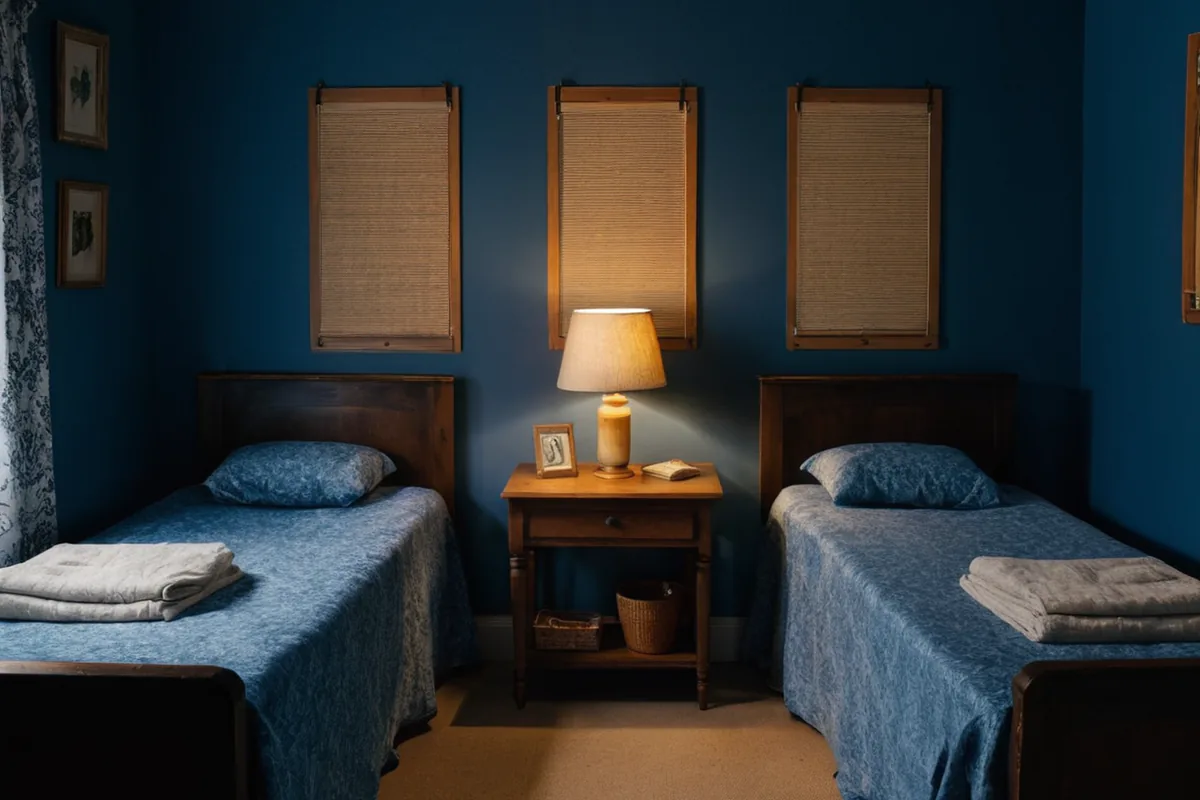
If bedtimes differ, give the later sleeper a quiet place outside the room for reading or preparing clothes. Small clip lights or shaded lamps can help, but cords and fixtures should be checked for safe placement.
Use a small basket for each child’s bedtime items so pajamas, a book, and comfort objects can move together without a nightly search.
Choose a short reset everyone can do
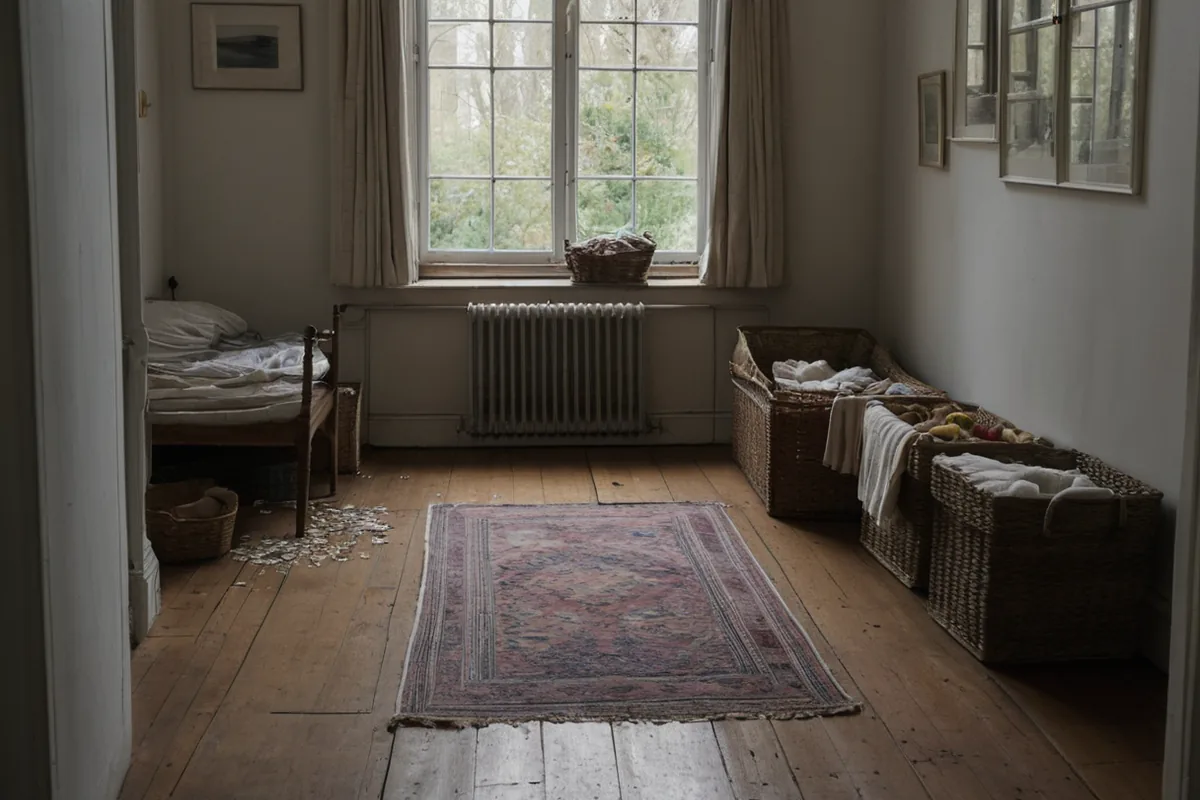
A five-minute floor clear is easier than a vague instruction to clean the room. Put books on the shelf, clothing in the hamper, and toys in broad bins rather than maintaining many tiny categories.
Review the arrangement as children grow. What feels fair and reachable can change quickly, and the room should be allowed to change with them.
Keep it simple
- One personal shelf each
- Clearly shared play area
- Separate bedtime baskets
- Simple floor-clear routine