Start with the daily drop
For two or three days, notice where shoes, bags, coats, keys, and paper naturally land. That pattern is more useful than an idealized organizing plan. Put storage close to the real drop point instead of expecting everyone to take a detour.
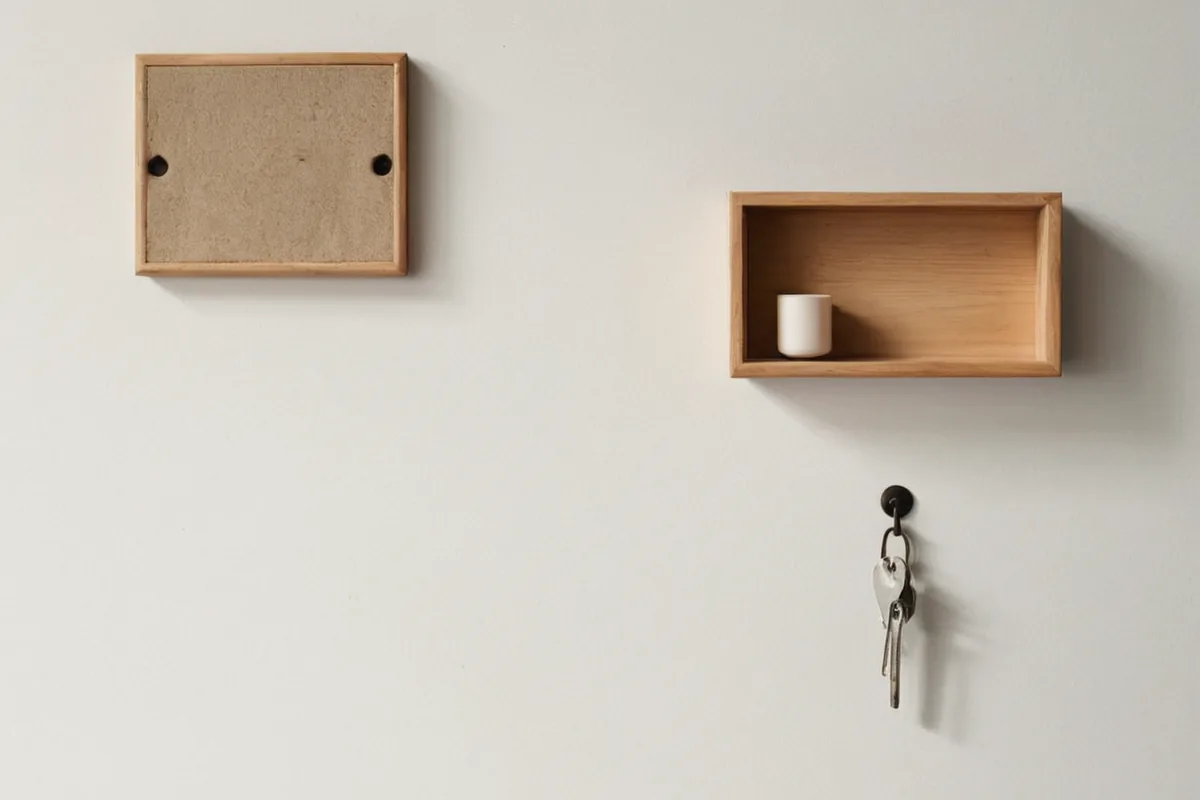
A shallow tray can hold keys and pocket items. One hook per regular bag prevents a pile on the floor. A small basket for outgoing library books or returns gives time-sensitive items a visible home.
Give the floor some breathing room
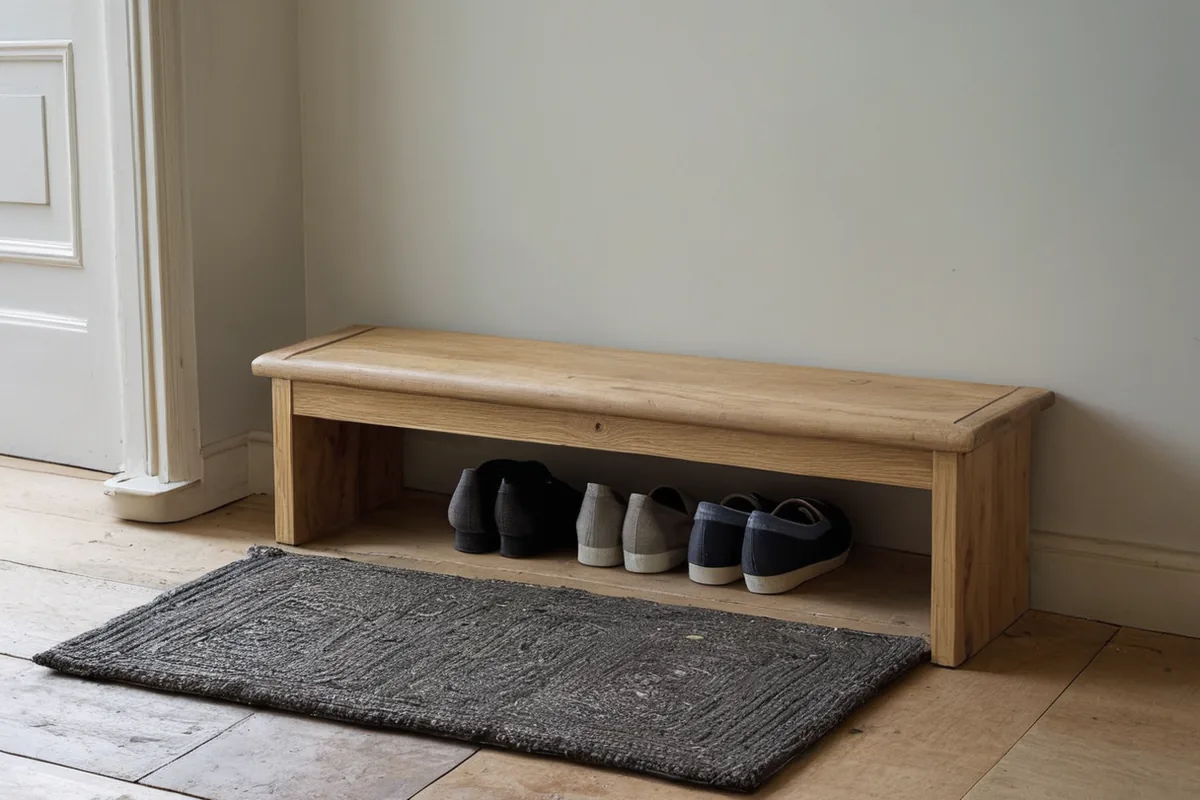
Keep only the shoes used this week near the door. Move occasional pairs to bedroom storage, and use a washable mat or low rack to define the active zone. A narrow bench can help, but a sturdy wall hook and a clear patch of floor may be enough.
If children use the space, place their hooks where they can actually reach them. The easiest system is usually the one that gets used without reminders.
Add a five-minute reset
Choose one predictable moment—after dinner or before bedtime—to return stray items, recycle paper, and check the outgoing basket. The reset should be short enough to happen on a tired day.
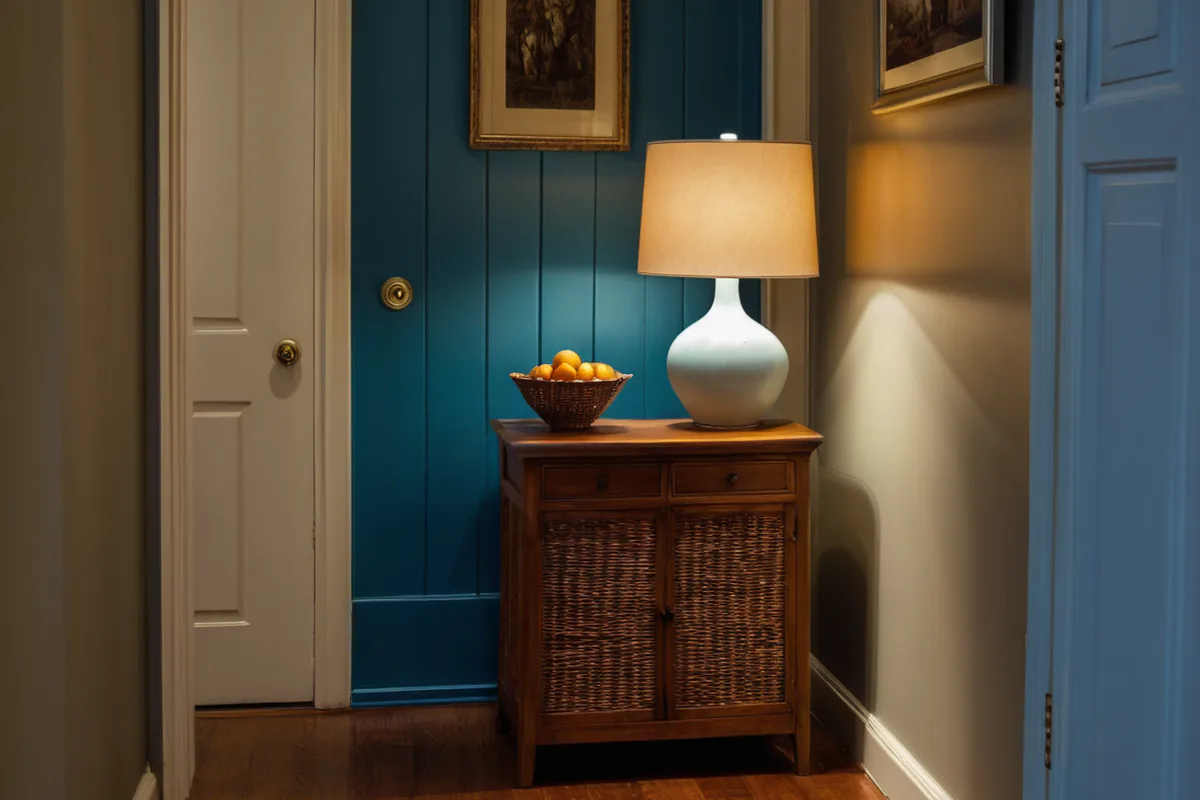
Leave one small open spot. That bit of visual space makes the entry feel calmer and gives tomorrow’s essentials somewhere to wait.
Keep it simple
- One tray for keys
- One reachable hook per bag
- A limited shoe zone
- A basket for items leaving the house